Three controls, three different jobs
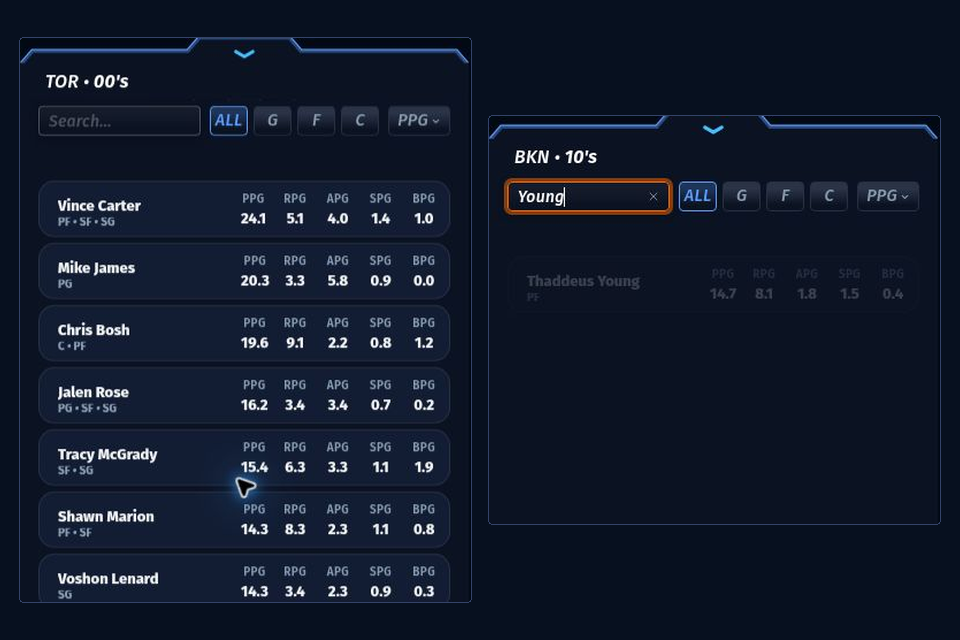
Find a name within the drawn pool. A failed name search can mean the version is unavailable, but it can also mean another filter is hiding it.
Use ALL, G, F or C to reduce the list. Filtering is a viewing choice; it does not move a player into an occupied roster position.
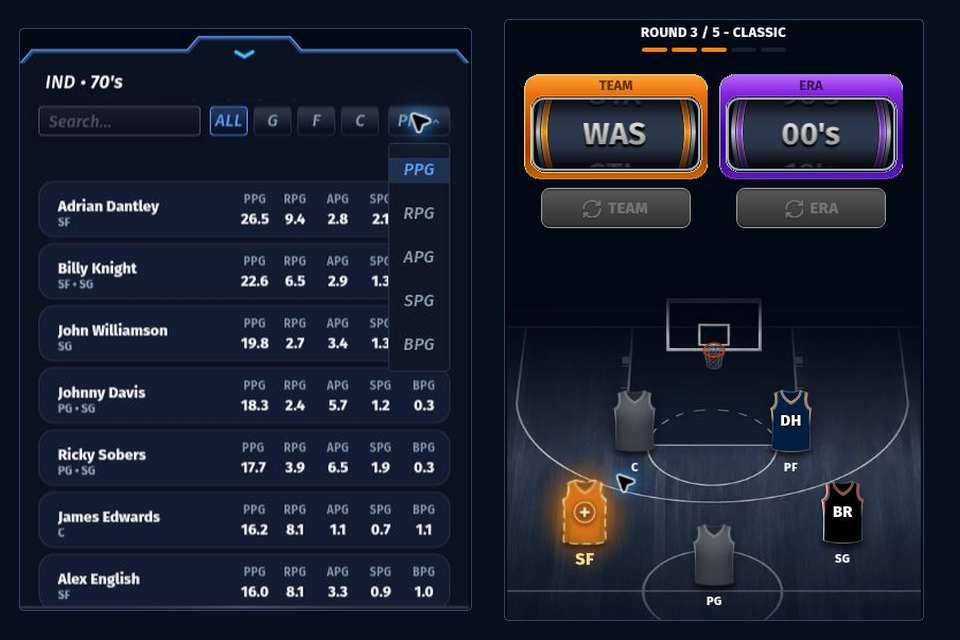
Order the visible candidates by a selected category. First in PPG means highest in that column, not highest in every column.
Start a fresh comparison with an unfiltered list. Apply one control, see what changed, then add another if necessary. Keeping the operations separate makes an empty list much easier to diagnose. If you need the order of the draft itself, return to the step-by-step controls.
Inspect the leading row before picking it
PPG is a quick way to find scoring. Before taking its leader, scan that card’s other four columns and compatible positions. A scorer who cannot enter the roster is not a candidate for this pick; a scorer who can fit may still give up passing or rebounding to another option.
Switch from PPG to RPG or APG and follow the names that move up. The values stay the same; only the order changes. If the same card remains attractive after you read the alternative, you have learned more than its rank in one column.
Make a short list of usable candidates, then read each stat column across that list. You can eliminate an incompatible option immediately, regardless of how attractive its visible numbers look.
See what sorting does
The table below uses fictional cards to make the sort easy to follow. Choose a column: the rows and bars reorder together while the five values on each card stay fixed. Try finding the passing leader before checking the explanation underneath.
| Practice card | Positions | PPG | RPG | APG | SPG | BPG |
|---|---|---|---|---|---|---|
| Card D | SG | 25 | 3 | 2 | 0.9 | 0.2 |
| Card A | SG / SF | 22 | 6 | 5 | 1.1 | 0.4 |
| Card C | PG / SG | 19 | 4 | 8 | 1.8 | 0.3 |
| Card B | PF / C | 17 | 9 | 3 | 1.4 | 1.2 |
Bar lengths compare only the selected column, scaled to its largest value. They are not player ratings, a combined score or projected wins.
What the example reveals
Card D leads scoring, Card B leads rebounding, and Card C leads assists. If your only open space is PG, the fictional position list makes Card C the usable option from this set. Sorting cannot remove that constraint.
Check the whole pool before a respin
Suppose you inspect the guards in the current draw, then decide to look for a center. If G is still selected or a name term is narrowing the list, that view cannot answer your new question. Clear the name field, choose ALL and inspect the center options. This is a change of view within one draw; the next draw resets the controls.
Cards returning after that reset show why it matters: you had not yet seen the full offer. Now check which cards fit the board. If the current arrangement still leaves no useful option, consider a legal jersey move before comparing a team respin with an era respin.
Check these four details before the pick
- Name the card you favor and the role it can still occupy.
- Identify the column that brought it to your attention.
- Read at least one competing card's other columns.
- State the main sacrifice you accept by choosing this option.
That last sentence is useful even when the decision seems obvious. “More scoring, less passing” describes the exchange. “Best player” skips the evidence. For errors that come from the interface rather than the roll, check the draft-mistake repairs.
When a card surprises you in Classic, remember the franchise, era and the column you had underestimated. That gives you a specific cue for a later HoopIQ attempt, rather than another name on a general list of NBA greats.