Site · Fan guide method
About This Guide: Read the Offer, Explain the Choice
A useful guide gives you a question you can take back to the board. Here is how the articles divide that work and how to distinguish an explanation from a result.
A reference for the card in front of you
This independent 82-0 game guide follows the decisions a short draft makes interesting: who is actually offered, which job remains open and whether a different draw is worth its cost. The screen provides the choices. The articles help you describe the question between them.
A famous name is a useful starting point for conversation, but it is not a complete card comparison. A particular team and period can change the entry you receive. That is why this guide returns to supplied numbers, available placement and the finish shown by the game.
Follow the missing detail, not every page
Take one useful observation back to play. “The center job was still open” is more precise than “that player is always good.” A guide earns its place when it helps you explain an actual choice, including an alternative you decided against.
Three kinds of material have different jobs
| Material | What it helps you inspect | What would give it a different meaning |
|---|---|---|
| Interface reference | A displayed label, action sequence or selection constraint | A changed game screen requires checking its current offered control |
| Worked example | A specific comparison, difference or statistical tradeoff | Applying its numbers to a real card requires that card’s actual values |
| Practice control | A relationship you can adjust on the guide page | An actual draft result must come from the game window |
Explanatory examples are labelled where you use them. Their purpose is to expose the reasoning, not to borrow the authority of an official result. The projection article keeps the returned record separate from an invented win formula.
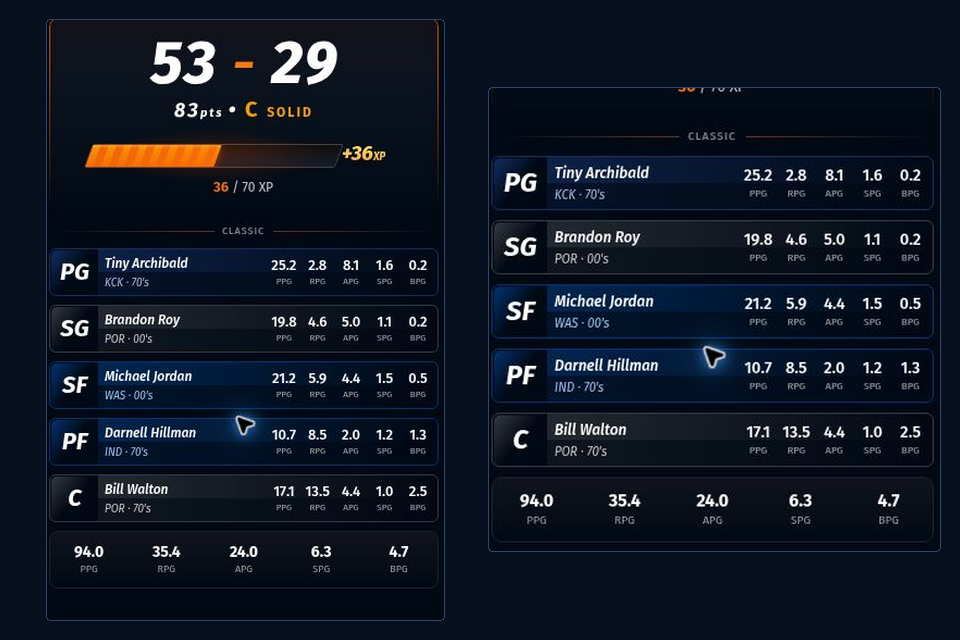
A useful review includes the offer and the finish
A selected roster alone leaves some questions unanswered: what else was available, which job was scarce and whether a different version of the same player appeared. Keeping that context makes a near miss worth examining instead of turning it into a universal rule.
The named-player pages focus on reading a statistical profile, rather than copying a biography or maintaining a best-player ranking. The sports pages give each alternative its own roster and result notation. Similar Games helps you choose between another short draft and a continuing management game.
Pick the article for the decision you are examining, then test its relevance against the offer.
Find a decision guide →