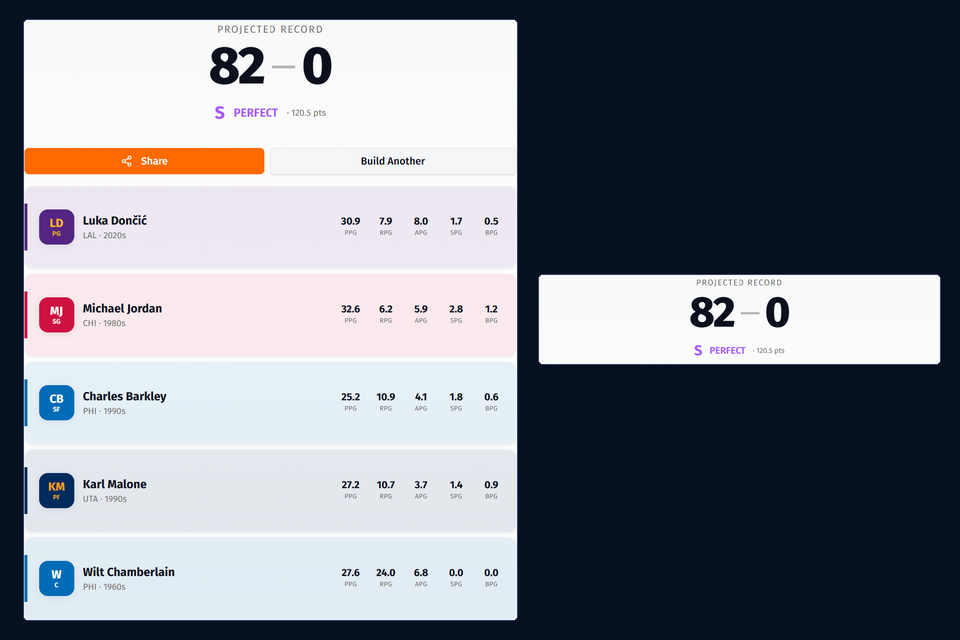
Eighty-two wins. No losses. That is the target in the 82-0 game. Here is how to recognize a complete result and describe a successful draft without losing the details that made it possible.
🏆The result has to be a complete 82–0
The game's perfect-season objective is a returned record of eighty-two wins and zero losses. Count both sides of the result. A full-looking roster or a strong statistical summary is still a draft until the game supplies its finish.
A completed 82–0 is evidence of success for that attempt. It supports a useful statement—this roster, in this run, reached the target. A claim that every draw or every repeat must do the same asks for much more evidence.
📋Keep enough detail to understand the finish
A useful success record combines outcome and draft identity
Detail to retain
Question it answers
Returned wins and losses
Did the completed result meet 82–0?
All five entries shown with the completed result
Which roster reached that result?
Team and era for each card
Which versions of those players were used?
Mode, restrictions and special actions used
Under what draft conditions was the roster assembled?
Make a note of detailed card fields before placing them if you want a statistical record too. A filled jersey is not a complete five-stat notebook. A score-only crop can show success, but it leaves the player versions and drafting choices difficult to compare.
Save the result with the roster
The finished record answers the success question. Keeping the surrounding draft identity makes that record useful for a later review.
Practice record checker · arithmetic only
Does the written record satisfy the condition?
Use whole-number wins and losses. The opening 82–0 is a practice entry, not a run played on this page. The checker tests the total and target; it cannot calculate the result of a lineup.
82 wins0 losses
The segments count games in your written record, not chances of winning.
🧩Same names can describe a different draft
A successful five-player list needs more than names to be useful. A different team or period can mean different numbers for a familiar player. The next offer may also leave you with different destinations and choices.
Copying only the names discards those conditions. Reconstruct what you can: card identities, permitted placements and the actions used to reach the final roster. The player profiles help with recognition; the draft reference helps with the board.
🔬A contribution gain is not a quoted win price
The game describes a nonlinear conversion to its season record. A printed category improvement is something you can compare, but it does not come with a verified fixed number of extra wins. The exact perfect-season threshold is not established by this guide.
It shows that the reported attempt succeeded. It does not settle what a changed card version, different offer or repeated run will return. Keep the original conditions with the result rather than promoting one success into a universal recipe.
Does a without-Wilt run use a different success condition?
The record target remains eighty-two wins and zero losses. The additional restriction asks whether Wilt is absent from the final roster. Record both facts if that is the challenge you chose.
Can a total of 82 games still miss the target?
Yes. Wins and losses can total eighty-two while the loss count is greater than zero. Check the returned pair, not just the total or the roster's appearance.
For the 82-0 game, the most useful success claim is specific enough to review: the completed record, the five exact cards and the way the draft was built.
Keep a complete result with its roster; on the next attempt, review the decisions instead of copying names alone.