Similar games · Baseball lineup card
Diamond Draft / 162-0: Eleven Slots, One Projection
The baseball draft opens under the name 162-0. Follow Eligible and Assign to, keep DH separate from pitching, and judge the normal draft by its projected wins and losses.
The Diamond Draft game is called 162-0
This baseball alternative to the 82-0 game builds an eleven-slot lineup: nine batting positions, a starting pitcher and a reliever. The Diamond Draft address opens the game branded 162-0, whose normal draft returns a projected record.
Follow Eligible before choosing a destination
- Start and SpinGet the offer for the selected era setting.
- Read EligibleIdentify the card's supported open places.
- Select the cardOne available place fills immediately; several reveal Assign to.
- Check the lineupConfirm which batting or pitching job you spent.
Play Diamond Draft / 162-0
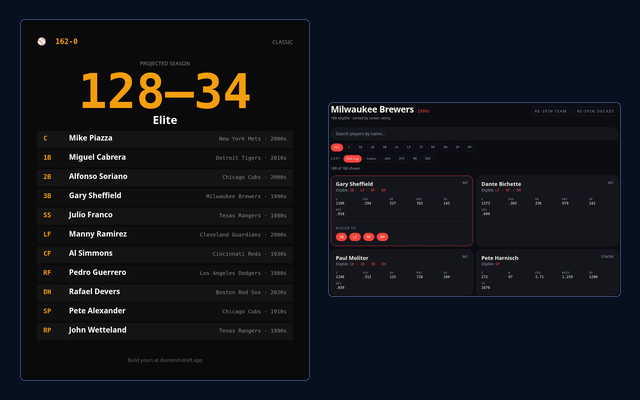
Lineup slots and pitching. Make each pick fit.
Nine batters, two pitching jobs
C1B2B3BSSLFCFRFDH
C is catcher, with the infield and outfield jobs around it. DH belongs to the batting nine but does not name a fielding position. SP and RP remain two distinct pitching openings, so a completed group of hitters leaves pitching work to do.
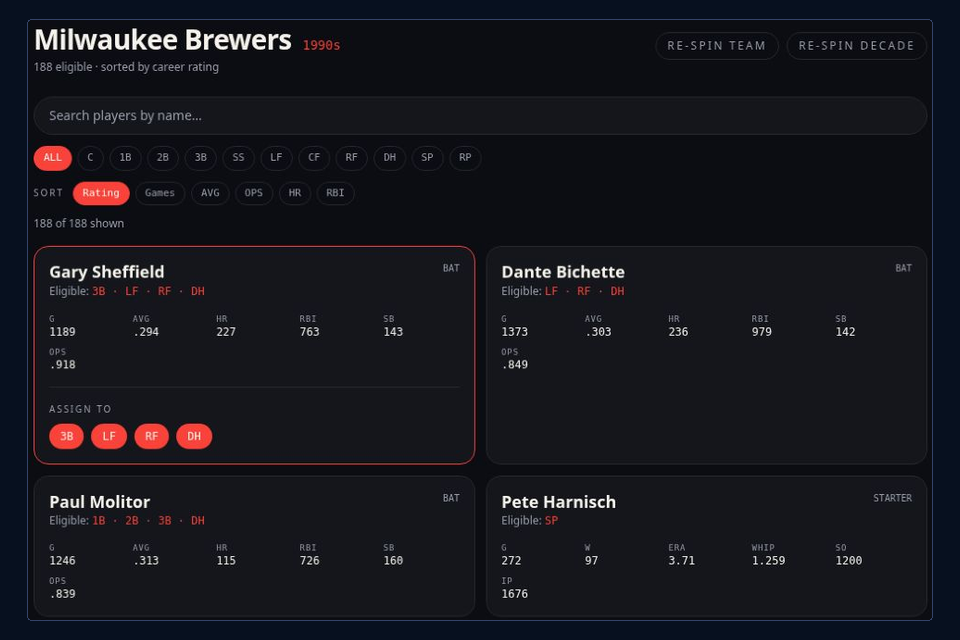
Where should an eligible hitter go?
Consider a hypothetical hitter offered at both 1B and DH, with both slots open. The contribution comes with a placement decision: which of those openings do you want to leave for a later candidate?
| Place the hitter at | Keep open | The remaining question |
|---|---|---|
| 1B | DH | Which later eligible hitter deserves the flexible batting place? |
| DH | 1B | Which later candidate can fill first base? |
The two routes spend different options. Choose using the current card's permitted jobs and the gaps in the lineup. Pitchers stay within their supported SP or RP assignments; DH does not solve a missing arm.
Use the allowance for this offer
Era and visibility
All-time and Modern set the draft's era scope. Classic exposes stats during selection, while Hard Mode hides them. Choose those conditions before starting so the information available for each pick is clear.
Team and Decade re-spins
In the normal draft, Team preserves the decade and Decade preserves the team. The allowances reset after a placement. Use the current offer's remaining control deliberately; a spin can still return the same context.
What Projected season actually tells you
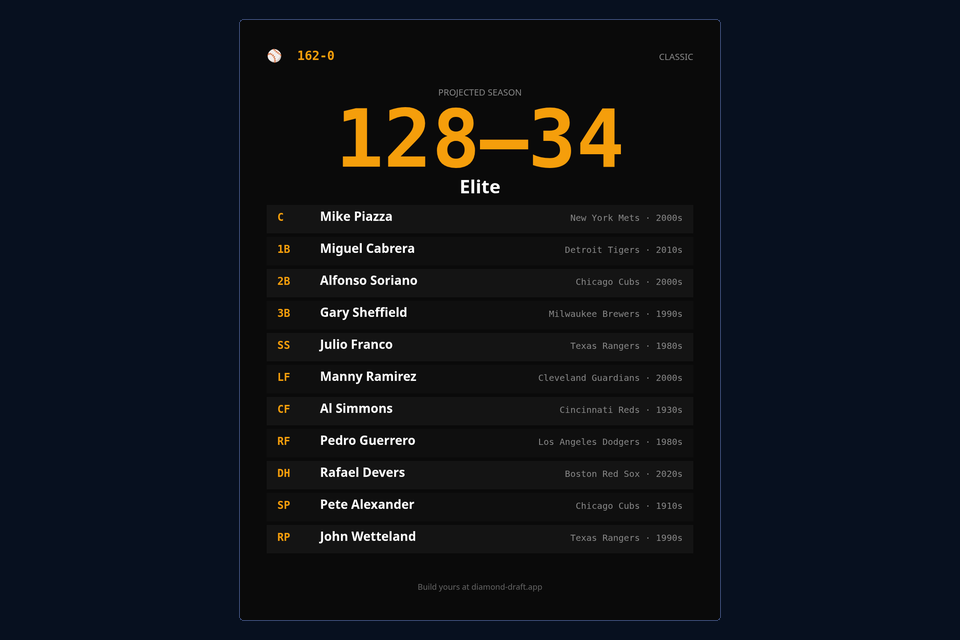
The eleventh placement automatically produces the normal draft's Projected season. It converts weighted card contributions into a wins/losses projection out of 162 games. The standard calculation is deterministic for its supplied lineup and scoring data, rather than a fresh sequence of 162 random match outcomes.
The scoring panel uses decade ratings, playing-time weighting and a comparison benchmark. Keep those terms with the projection. Card-display wording can describe career statistics while the scoring explanation describes decade contributions, so use the field labels on the screen when recording values.
The target is a projected 162–0. Preserve the eleven entries and the returned pair when judging an attempt. The sport table explains how that notation differs from the NBA, hockey and soccer objectives.
More Similar Games
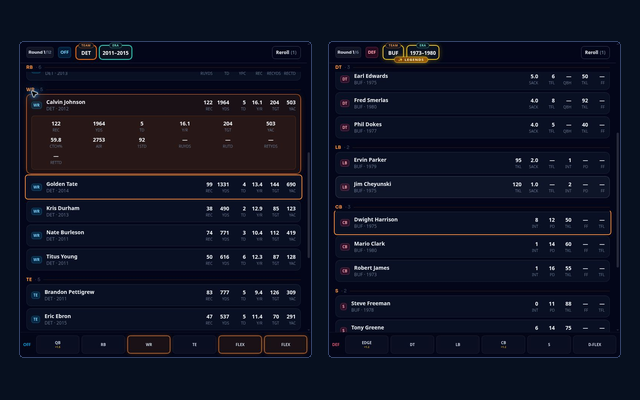
20-0 Football
Try football’s dedicated jobs and RB/WR/TE flex choices.
38-0 Soccer
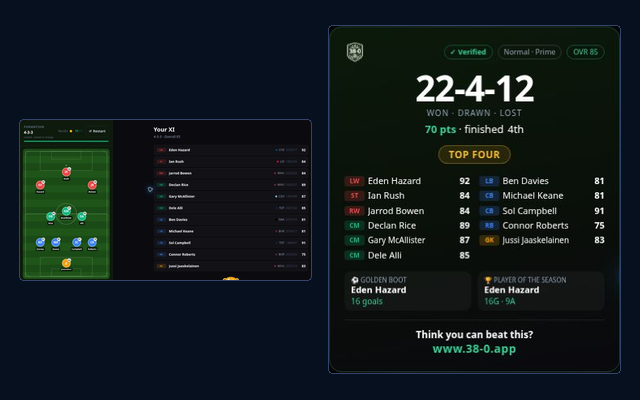
Use a soccer XI where a draw changes the points total.
Basketball GM
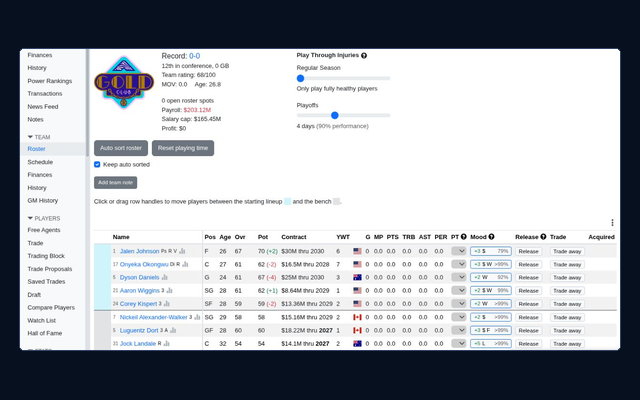
Keep managing a basketball team after the first lineup is chosen.
Return to the original NBA draft for five basketball picks; baseball uses the eleven-slot lineup described here.
Play on the homepage →