LeBron James: The Value Is Across the Row
A LeBron choice deserves more than a glance at PPG. This 82-0 game profile uses a completed Finals series to show his breadth, then turns that idea into a five-column draft check.
Breadth, shown in a completed series
LeBron accumulated points, rebounds, assists, steals and blocks across that Finals series. The table makes “all-around production” concrete: five different event totals, each divided by the same seven appearances. It is a historical series, separate from any franchise-era card in the draft.
| Category | Series total | Total ÷ 7 |
|---|---|---|
| Points | 208 | 29.7 PPG |
| Rebounds | 79 | 11.3 RPG |
| Assists | 62 | 8.9 APG |
| Steals | 18 | 2.6 SPG |
| Blocks | 16 | 2.3 BPG |
A broad player gives you more than one question
The point of the sheet is the spread of contributions, not a sum of the five averages. Blocks, assists and points count different events. Adding them into one number would introduce a weighting decision the table has not made.
Carry the broad profile into the draft by reading across LeBron's row. Which fields improve on the other legal choice? Which fields do not? A productive all-around version can still lose one category to a specialist.
The statistics directory explains the units if a label is unfamiliar. Keep the comparison attached to the actual card's team and period, rather than importing the entire Finals line.

Five prompts for the card in front of you
- PPG
- Does the scoring lead survive when the alternative's other advantages are named?
- RPG
- Does this version bring rebounds along with its scoring and creation?
- APG
- How much passing comes with the pick, relative to the card you would reject?
- SPG
- Which choice contributes more credited takeaways?
- BPG
- Does the block contribution add another advantage, or is it part of the sacrifice?
These prompts keep the smaller fields in view. Sorting by PPG can help find a scorer, but it can leave the reason for a broadly useful LeBron pick several columns away from the sort key.
Package or specialist?
- The useful contributions arrive together.
Suppose the actual card improves several fields you want from this choice. Describe that combination directly, then check the losses too. Breadth is strongest as an explanation when you can name the fields it brings.
- The alternative wins a particular job.
A specialist might lead in passing, rebounding or another category while losing elsewhere. That creates a real exchange. Calling LeBron “all-around” does not resolve it; the category differences are the substance of the decision.
Use the comparison guide for the exchange. With numbers hidden, the HoopIQ approach helps separate a strong memory of his broad role from a shaky guess about one period's exact average.
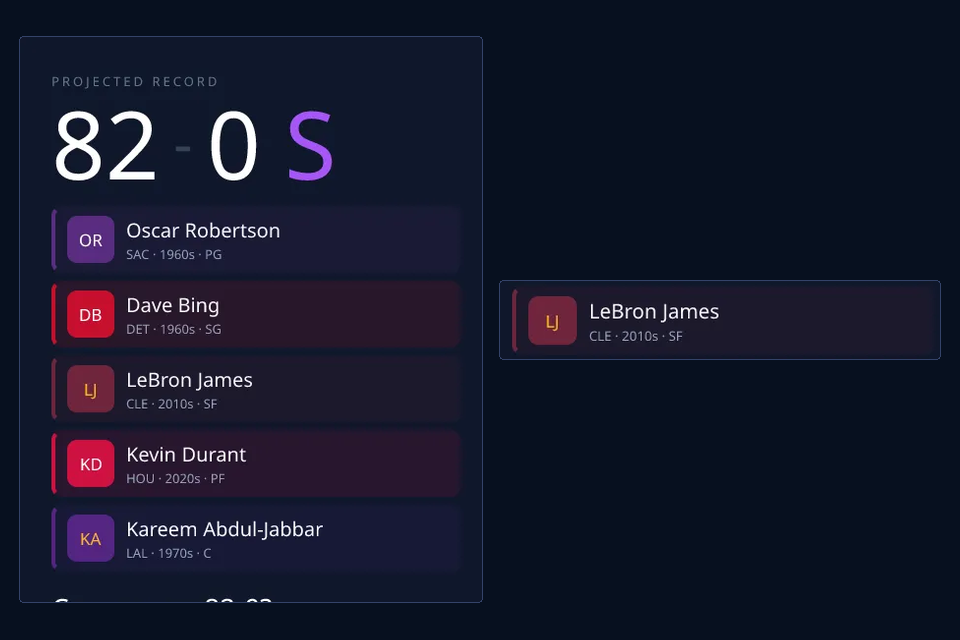
This completed share card places LeBron at SF for Cleveland in the 2010s. It shows identity and position; open the matching Classic candidate card to read its five averages. The Finals sheet below uses a separate sample.
Read the whole LeBron row and name the useful combination, rather than stopping at its highest number.
Play on the homepage →